Know The Different Injection Molding Processes
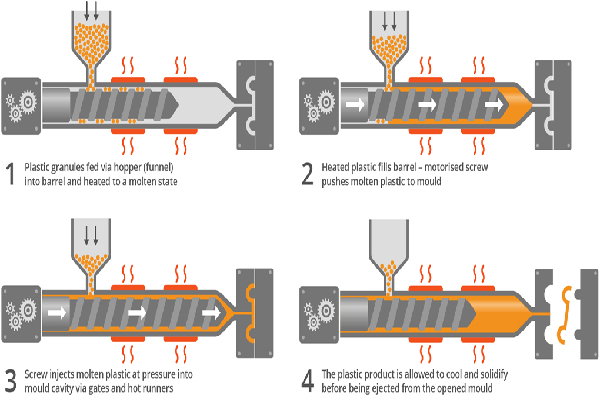
Types Of Injection Molding Processes
The different injection moldings processes are:
- Metal
- Thin Wall
- Hot Runner
- Overmolding
- Gas-Assisted
- Insert Molding
- Liquid Silicone
- Thermoplastic
- Cold Runner
- Injection Molding- Metal
1. Injection Molding - Metal
Plastic is one of the few materials used in injection molding. Big industries that use metals also employ this specific manufacturing process, and niche industries often create certain product requirements. It is quite useful in electronics-making or other industrial processes where digital products need multifaceted parts. This newer technology replaces traditional methods because it's more accommodating with such diverse market needs.
2.Overmolding
Overmolding is a molding technique in which the molded object has two materials. One material, typically TPE (thermoplastic elastomer), is injected into or over another rigid plastic to produce an optimum bond between them without using primers or adhesives.
3. Insert Molding
The process of inserting a component into an injection mold before the injection molding is done insert moulding can improve strength in molded parts. In traditional methods where there aren't any inserts being used, you have to worry about weak spots that arise from cooling and other features like threads or grooves; by using this process, these problems are eliminated; surfaces get strengthened in the first phase.
4.Gas-Assisted
The gas-assisted plastic injection molding process has long been the go-to method for several parts, no matter how intricate their shape. The hollow section is one such area where this technique can come in handy without costing an arm and leg. This molding process is highly versatile because it helps maintain smooth finishes on all sorts of molded, complex shapes or hollow sections.
5.Thin Wall
In thin-wall injection molding, a special type of conventional injection molding focuses on mass-producing plastic parts that are light and thin to save costs. This technique also shortens cycle times, so the productivity is higher with lower manufacturing costs per part.
6.Thermoplastic
This type of injection molding is a process that can create complex parts and make them fully functional by injecting plastic resin into the pre-made mold.
7.Liquid Silicone
With a very hot mold, this process can work medical devices of high-grade and car parts. The process is not as adaptable to high temperatures, but it requires an extremely hot mold to operate effectively. When you use liquid silicone in injection molding, the material used has both cold and heat properties without being at risk for melting or burning. When subjected to either temperature again like regular plastics, they're heated up multiple times after having been cooled down first once already.
Hot And Cold Injection Molding Processes
8.Hot Runner
This is a highly popular method of Molding in the process of plastic resins that need heat. Hot runner molds make use of an electric system that can heat two plates, which an electric system can heat to accommodate small and large parts alike. It's good for those businesses who want their products to make injection molding with the highest quality and without costing too much production costs!
9.Cold Runner
Cold runner type molding is the perfect solution for those companies that want to make quick turnarounds on their injection molds. This process helps cut cycle times in half and reduce labour costs with robotic assistance and the removal of runners during production cycles.
Injection molding is an economical way to create your product. It can be used in any industry, and it guarantees the best material for that particular project you are working on.
In case of further queries on Injection Molding, contact Tech Plastic, the best injection mould manufacturers in india
Read More: Plastic injection mold manufacturing process: A guide
